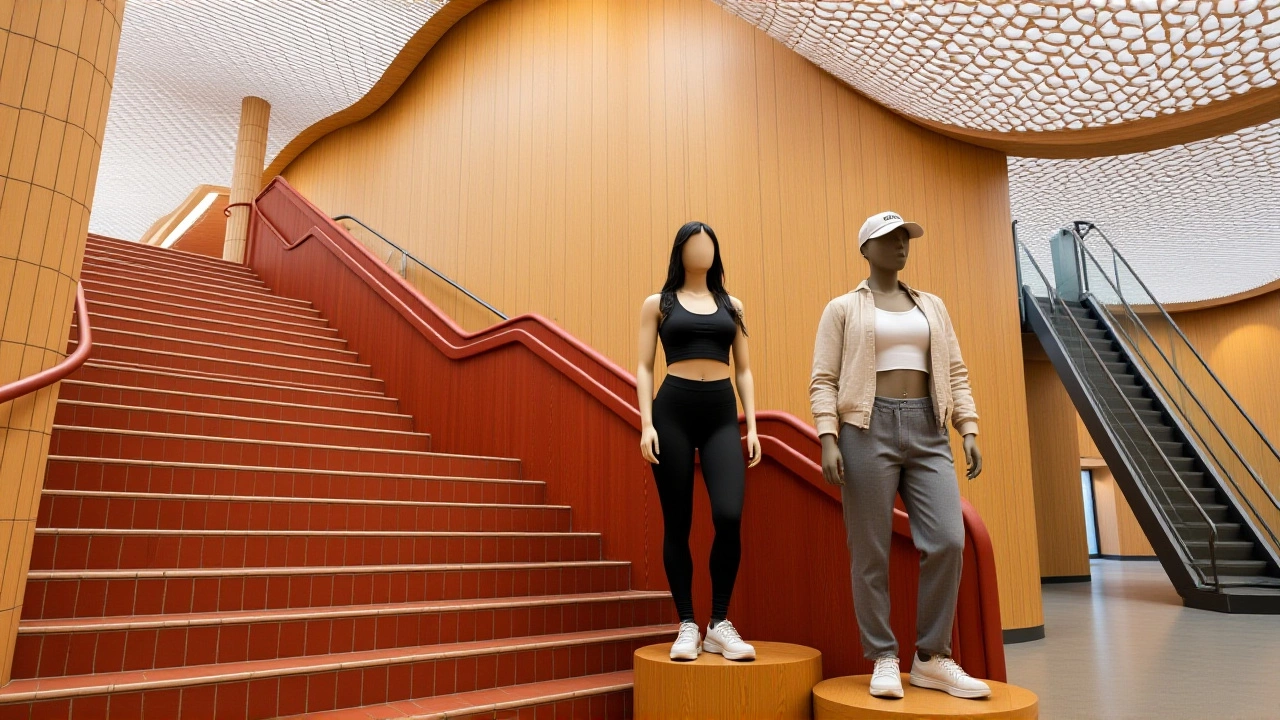
On November 17, 2023, Lululemon Athletica Inc. didn’t just open a new store — it unveiled the future of retail. The 17,000-square-foot, two-floor flagship at Broadway and Spring Street in SoHo, New York, marks the first North American rollout of its next-generation store format — a sensory-driven, community-rooted experience designed to become the global standard for every Lululemon location moving forward.
The SoHo Experiment: More Than a Store
This isn’t your typical athleisure boutique. Walk in, and you’re met with terrazzo flooring that mimics the texture of moisture-wicking fabric, a hand-formed tile staircase that curves like a yoga pose, and custom 3D-printed panels made from recycled ocean plastic. Above it all, a lighting installation pulses subtly in rhythm with movement — not just decoration, but a deliberate trigger for emotional connection. The space doesn’t sell yoga pants. It sells belonging."Every detail has been curated to evoke emotion and connection," said Darin Rabb, senior vice president of global brand creative and experience at Lululemon. "We’re not just showcasing products. We’re building a ritual." The store’s design lines, materials, and even the scent profile were developed in tandem with Lululemon’s product team — a rare alignment of retail and product development rarely seen in fashion.
A Strategic Rebirth in a Historic Hub
SoHo has been Lululemon’s spiritual home since 2007, when the Canadian brand first planted its flag in New York. Back then, it was a quiet, niche player. Today, the neighborhood is one of the most competitive retail corridors in the world. The old SoHo store — a modest 6,000-square-foot space — was outgrown, both in size and ambition. The new location triples the footprint, but more importantly, it redefines the relationship between brand and customer."Since 2007, SoHo has been one of Lululemon’s most vibrant hubs," confirmed Carla Anderson, now senior vice president and general manager of North America. "This isn’t just a relocation. It’s a recommitment. We’re doubling down on the community that helped us grow." The store features a printed neighborhood guide curated by local artists, wall-mounted boards highlighting SoHo-based fitness coaches and yoga instructors, and even phrases in neon signage lifted from local slang — "No bad days," "Move like you mean it," — scrawled across reclaimed wood panels.
A Global Rollout, Simultaneously Launched
The SoHo debut wasn’t isolated. On the exact same day, Lululemon opened an identical flagship in Gangnam, Seoul, South Korea — a market known for its hyper-competitive retail scene and tech-savvy consumers. The timing was no accident. Both openings coincided with the 2023 holiday shopping season, a critical window for retail profitability."We’re testing this format in two of the world’s most discerning markets," said one industry analyst familiar with Lululemon’s internal strategy. "If it works here, it works everywhere." The move comes as North American sales growth has slowed, with Q3 2023 revenue rising just 6% year-over-year — the lowest in nearly five years. Investors are watching closely. This isn’t just about aesthetics. It’s about retention.
The Experience Economy, Executed
Forget checkout lines. At the new SoHo store, customers book personal shopping appointments weeks in advance. There’s a customization station where leggings can be monogrammed with names or motivational phrases. A dedicated "Movement Studio" hosts free morning yoga sessions led by local instructors. Even the fitting rooms are designed with ambient lighting and soundscapes tuned to enhance focus and calm.The materials alone tell a story: timber joinery carved by hand, recycled aluminum accents, and tiles shaped by artisans in Portugal. These aren’t cost centers — they’re brand differentiators. In a market saturated with online shopping and fast fashion, Lululemon is betting that people will pay more for a moment — not just a product.
What’s Next? The Blueprint Goes Global
All new Lululemon stores opening in 2024 and beyond will follow this SoHo template. Existing locations will be retrofitted over time. The company has already signaled plans for similar flagships in London, Tokyo, and Los Angeles. The goal? To turn every store into a cultural anchor — not just a transaction point."We’re thoughtful about ensuring that every space we open serves and engages our community," reads the official statement from Lululemon. "This flagship, powered by our passionate team of Educators, showcases the full potential of Lululemon’s brand experience in one of the most celebrated retail destinations in the world."
It’s a bold play. And if it succeeds, it won’t just redefine Lululemon — it could reshape how all premium brands think about physical retail in the age of Amazon.
Frequently Asked Questions
How does this new store format address Lululemon’s slowing North American sales?
Lululemon’s new SoHo flagship targets customer retention over volume. With North American sales growth dipping to 6% in Q3 2023, the company is investing in immersive experiences — like personalized fittings, community events, and sensory design — to deepen loyalty. The idea is that customers who feel emotionally connected to the brand will spend more, shop more often, and resist cheaper alternatives.
Why was SoHo chosen as the launch location?
SoHo has been one of Lululemon’s most successful markets since its 2007 debut, serving as a cultural incubator for its early adopters. The neighborhood’s blend of fashion-forward consumers, foot traffic, and media visibility makes it an ideal testing ground. Replacing its original 6,000-square-foot store with a 17,000-square-foot flagship signals both confidence and a return to roots.
What makes this store different from previous Lululemon locations?
Unlike past stores focused on product display, this flagship is designed around movement and community. Features include hand-carved timber structures, 3D-printed recycled materials, ambient lighting synced to motion, and local ambassador boards. Personal shopping, customization, and free in-store yoga sessions turn shopping into an experience — not just a purchase.
Is this store concept being used outside North America?
Yes. On the same day as the SoHo opening, Lululemon debuted an identical flagship in Gangnam, Seoul — a key market for premium fitness brands. The dual launch signals a global rollout strategy. Future stores in London, Tokyo, and Los Angeles will follow the same blueprint, making this the first truly standardized global retail format for the brand.
How much did the SoHo store cost to build?
Lululemon hasn’t disclosed exact figures, but industry estimates place construction and design costs between $15 million and $20 million — significantly higher than the $3–5 million average for a standard flagship. The premium comes from custom materials, artisan labor, and integrated technology like the motion-responsive lighting system.
Will existing Lululemon stores be upgraded to match this format?
Yes. While new stores will open fully compliant with the SoHo blueprint, Lululemon plans to retrofit existing locations over the next 3–5 years. The rollout will prioritize high-traffic urban markets first, starting with major cities like Chicago, San Francisco, and Toronto. The goal is consistency — every store, everywhere, should feel like the SoHo flagship.